

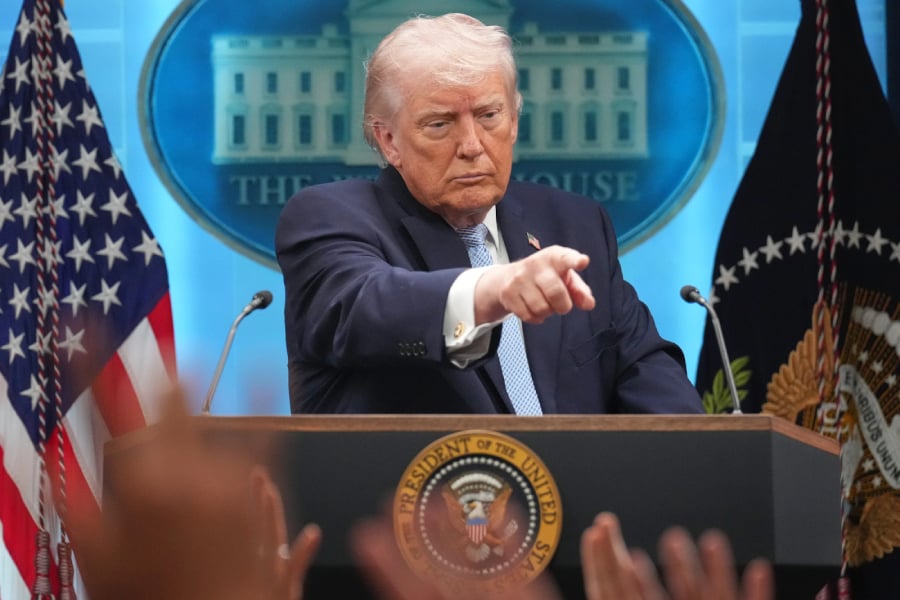
The White House is reportedly contemplating a significant expansion of its ban on the import of Chinese technology used in critical infrastructure, which includes areas such as telecom networks, internet equipment, and data centers.
This marks the first review of the policy by the Federal Communications Commission (FCC) since 2022, when it enacted restrictions against specific companies like Huawei, ZTE, Hytera, Hikvision, and Dahua, all of which are deemed to pose a national security risk. These firms are included in a 'Covered List' that prohibits their equipment from being sold within the United States.
Initially, the ban focused on particular industries; however, the FCC is now considering a broader application that extends beyond consumer technology and mobile phones. The agency aims to address existing loopholes in the procurement of Chinese technology, potentially rendering it impossible for any Chinese tech to be utilized, even through third-party resellers or subsidiaries.
This latest initiative is part of the FCC's ongoing strategy to reduce technological dependence on China. Recently, the agency has also prohibited imports of Chinese-made drones, consumer routers, and telecommunications equipment, thereby extending restrictions across entire sectors rather than limiting them to specific critical industries.
In response, the Chinese government has criticized these sweeping bans, accusing the U.S. of acting as a bully on the global stage. This has led to a series of retaliatory tariffs and bans between the two nations over recent years.
As with most bans, the immediate consequences will likely include increased costs for telecom and IT infrastructure operators who will need to replace existing equipment. However, this shift may also create opportunities for non-Chinese operators in the U.S. telecom and data center markets, especially if the FCC enforces stringent measures against third-party sales.
AI as a Potential Target Industry
While not the primary focus of the FCC's proposals, there is growing speculation that the agency's next target might be the artificial intelligence (AI) sector.
Critical infrastructure, particularly in terms of networking equipment—such as servers, storage devices, routers, switches, and exchanges—is integral to the development of data centers. If Chinese companies are excluded from this market, they could forfeit access to the largest infrastructure expansion seen in decades.
During his administration, Donald Trump emphasized the importance of AI as a key market, already implementing restrictions on Nvidia's sales of advanced chips to China. Recently, he permitted Nvidia to export some of its second-most powerful chip, the H200, to Chinese firms, but mandated that 25% of each sale be remitted to the U.S. government as export duties. Moreover, discussions have emerged regarding a 1:1 chip output tariff aimed at reducing reliance on Chinese technology.
This strategic approach appears designed to bolster American business conditions, even at the cost of higher prices and potentially diminished performance. However, the administration has also targeted U.S. companies that oppose its policies, notably designating Anthropic as a 'supply chain risk.' This label is significant, as it prevents the company from collaborating with any firms associated with the Pentagon.
Also read: The FCC’s ban on foreign-made routers shows how Washington’s national security crackdown is expanding beyond traditional telecom equipment.
Source: TechRepublic News