

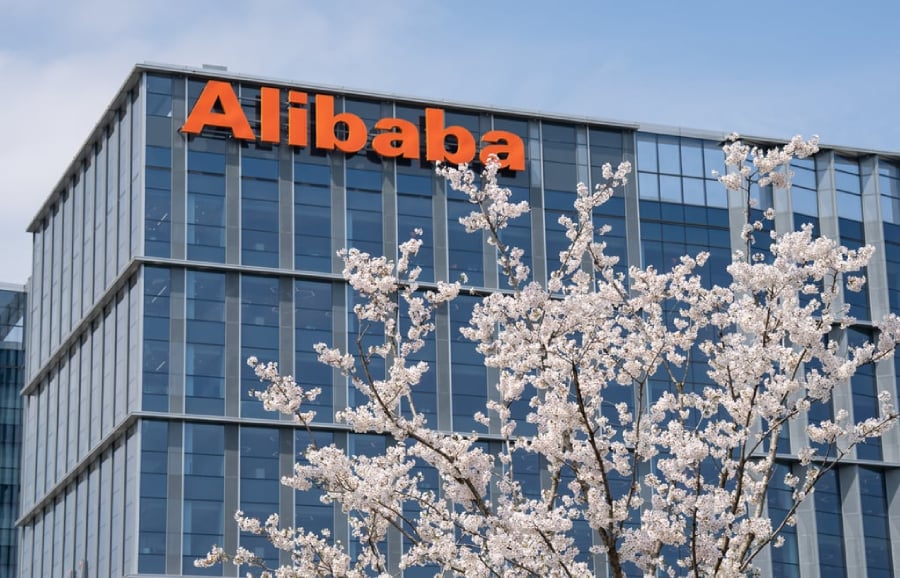
In the face of growing restrictions on advanced semiconductor technology, multinational technology companies are finding innovative solutions to maintain their competitive edge. For Alibaba, this means enhancing its technological capabilities by developing proprietary chips to fuel the creation of state-of-the-art data centers, while also fostering the local workforce.
Introducing the Latest Data Center
In collaboration with China Telecom, Alibaba has officially launched its latest data center in Shaoguan. This significant milestone was marked by a recent activation in early April, just a month after the commissioning of a large-scale array of Huawei Ascend 910C AI chips in Shenzhen. The new facility is powered by an impressive array of 10,000 Zhenwu semiconductors, all produced domestically by Alibaba as a direct response to U.S. export restrictions affecting AI chip technologies from companies like Nvidia.
Designed for optimal performance, Alibaba's Zhenwu chips are tailored to support advanced AI models capable of operating with hundreds of billions of parameters. While Alibaba's T-Head division spearheads the design and manufacturing of these chips, the data center itself is owned and operated by China Telecom.
Plans are already in place for future expansion, aiming to increase the capacity of chips from 10,000 to 100,000 in the near term. This data center is set to cater to numerous sectors, including healthcare, materials science, and government, among others.
Alibaba's venture into custom silicon isn't merely a reaction to external pressures; it represents a strategic move to gain tighter control over performance metrics, cost efficiency, and the scalability of its AI systems. This approach mirrors strategies employed by other tech giants that have embraced in-house chip design. Furthermore, it signifies a broader shift towards self-reliance as Chinese companies strive to develop domestic solutions to navigate the complexities of global semiconductor supply chains.
Capitalizing on the AI Boom
The new data center is not Alibaba's first initiative in the AI domain. The company has previously ventured into large language models (LLMs), known as Qwen, which are currently under development by Alibaba Cloud. The initial beta release of Qwen took place in April 2023, but it only became publicly accessible in September 2023. Built upon the Llama architecture developed by Meta AI, Qwen has since received regular upgrades, enhancing its capabilities.
The latest advancement in Alibaba's LLM offerings is Qwen 3.6-Plus, specifically engineered to excel in agentic AI, coding tasks, and retrieval-augmented generation.
Competing in the Global AI Landscape
As Chinese AI companies face escalating export restrictions from the United States, the necessity for domestic chip development and manufacturing has never been more pressing. This trend not only places them in direct competition with U.S.-based AI firms but also intensifies rivalry among domestic Chinese companies. The push for self-sufficiency in technology and manufacturing is reshaping the competitive landscape of AI, both within China and globally.
In related news, Nvidia-backed Reflection AI is planning a multibillion-dollar data center in South Korea, as the U.S. aims to bolster its open AI infrastructure to counter emerging Chinese competitors.
Source: TechRepublic News